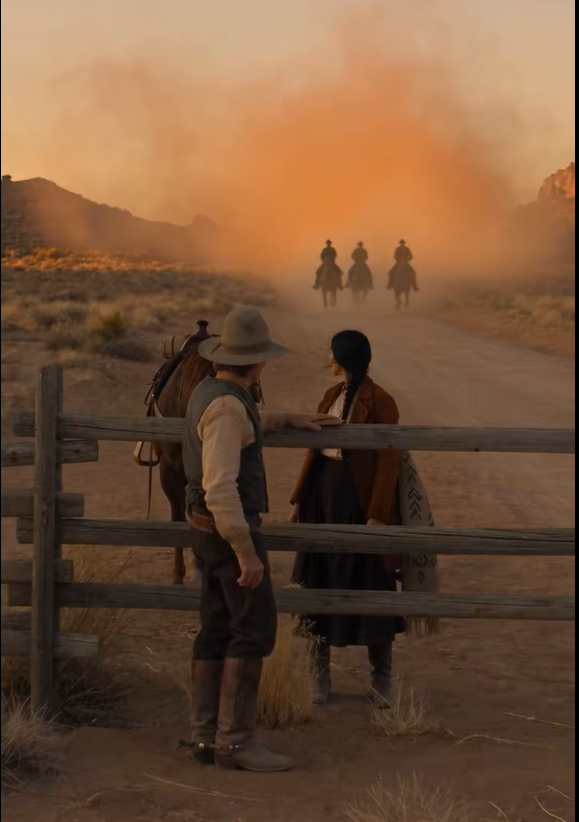
The first sound Clara Whitmore heard that morning was not the wind rattling the barn roof.
It was a man laughing at her.
By sunset, half the town would be laughing too.
And before the summer was over, the same men who had called her a fool would stand silent while she held one dirty piece of paper that could ruin the richest farmer in the valley.
But on that cold April morning in 1891, Clara knew none of that yet.
She only knew there were hundreds of goose eggs lying in the mud.
The wagon had overturned sometime before dawn on the north road, where spring thaw had transformed the ruts into deep brown trenches. Two wheels had sunk, the rear axle had twisted, and the load of wooden crates had slammed sideways hard enough to scatter eggs across the wagon bed.
The shipment belonged to Briggs Hatchery.
Everyone within twenty miles knew the name.
Harold Briggs owned more breeding geese than any farmer in that part of Montana. His whitewashed barns stood beside the river like little factories. Merchants came from Helena and Bozeman for his birds. Ranchers waited months for breeding pairs.
Clara could not afford even one.
She was twenty-seven years old, unmarried, and trying to keep alive the forty-three acres her father had left her after his death.
The Whitmore farm produced oats, potatoes, a little hay, and—when the weather was kind—just enough money to survive another winter.
The weather had not been kind lately.
Clara’s coat needed mending.
Her barn roof leaked.
Her horse, Molly, was nearly twenty.
And the money inside the blue tin box beneath Clara’s bed amounted to twenty-eight dollars and sixty-two cents.
That was all.
Then she saw the eggs.
They had been dumped behind Briggs Hatchery beside broken crates and rotten straw.
Nearly three hundred and fifty of them.
Clara stopped her wagon.
For a moment she simply stared.
Some shells were crushed beyond hope.
Others were split open.
But many looked almost whole.
She climbed down.
Mud pulled at her boots as she crossed the yard and crouched beside the pile.
She picked up one egg carefully.
A fracture as fine as a strand of hair ran from the rounded end halfway down its shell.
Clara held it toward the pale morning sunlight.
The shell had not collapsed.
There was no leaking.
She turned it slowly between her fingers.
“Planning breakfast for the county?”
The voice came from behind her.
Clara turned.
Harold Briggs stood in the hatchery doorway.
He was nearly fifty, wide through the chest, with a heavy dark mustache already turning gray at the edges. He wore a charcoal vest over an expensive cream work shirt that had probably never known a day’s real labor.
Two hired men were carrying broken crates from the yard.
Harold watched Clara examine the egg.
Then he laughed.
Clara ignored the sound.