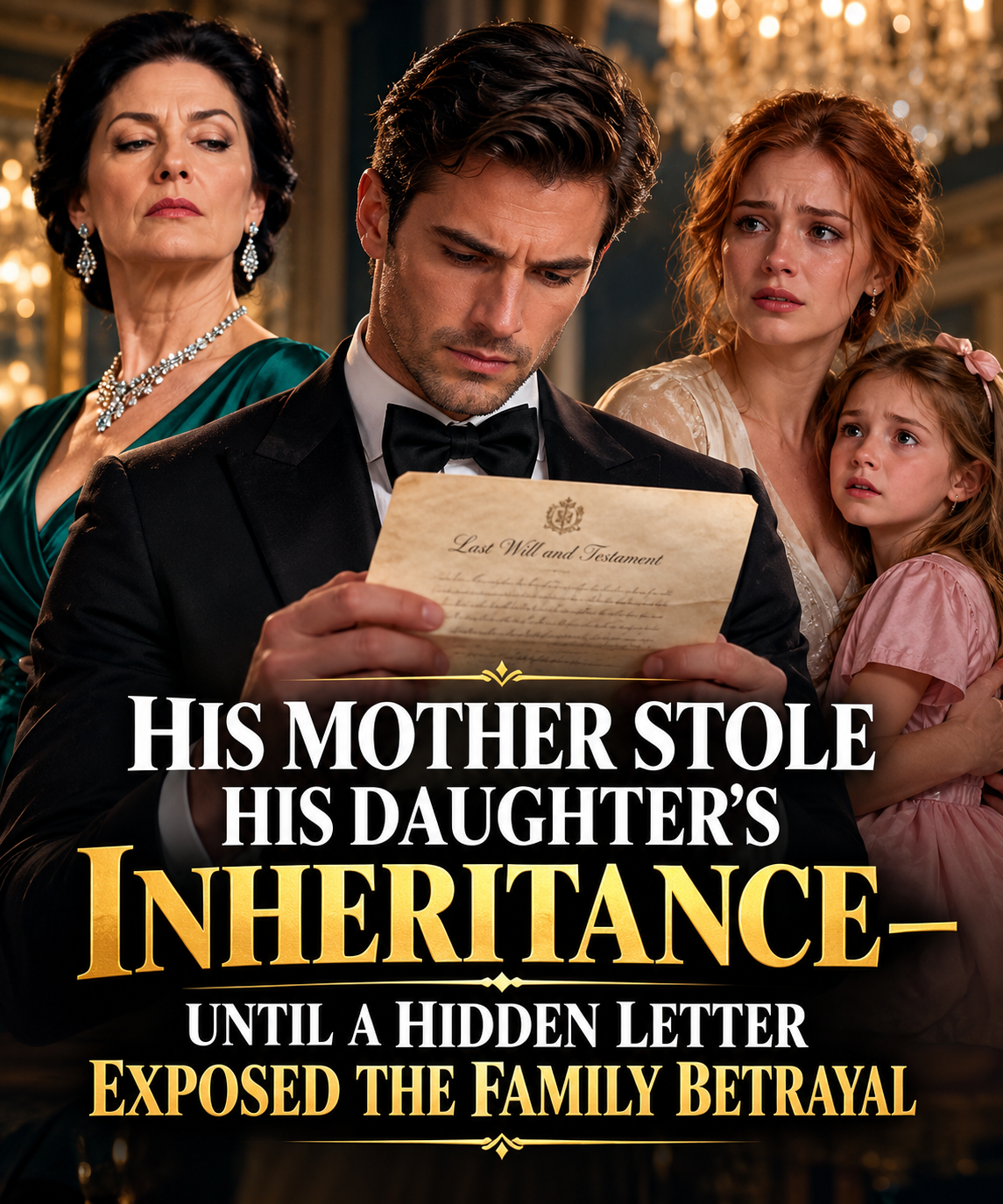
PART 5 — THE TRUTH THAT FINALLY SET THEIR DAUGHTER FREE
PART 5 SUMMARY: The final financial records reveal how far Victoria went to preserve her authority, while Daniel must face the consequences of his own misplaced trust. With Lily’s inheritance and the family’s future hanging in the balance, the Whitmores must decide what deserves to be saved—and what must finally be left behind.
The bank’s findings arrived before the board members had left the conference room. The expanded transfer had been submitted through an account controlled by Victoria, and the amount had been increased after Daniel signed the original authorization. The digital records also showed that the transaction had been processed using credentials assigned to Victoria’s office. Although the investigation was not yet complete, the evidence directly contradicted her claim that Daniel had knowingly approved every withdrawal.
Victoria’s attorney requested a recess. The board chair agreed, but he made it clear that no additional funds would be released and no property would be sold until the investigation was finished. For the first time in decades, Victoria could not solve a problem by insisting that everyone trust her judgment. The documents had created a record that could be examined by people who owed her no loyalty.
Daniel and Claire waited in a smaller conference room while Ruth coordinated with the bank and the independent auditor. Neither spoke for several minutes. Daniel knew that admitting his mistake had been necessary, but he also understood that honesty did not automatically restore trust. Claire had spent months asking him to look more closely at his mother’s decisions. He had dismissed her concerns because he believed that protecting the family meant protecting Victoria from scrutiny.
“I should have listened to you,” he said at last.
Claire looked at him. “You should have listened to Lily’s future, too.”
He accepted the rebuke without defending himself. The money might eventually be recovered, and the company might survive, but neither outcome could erase the fact that he had allowed his daughter’s inheritance to become a source of funding for a business he barely understood. He could not demand forgiveness simply because he had finally chosen to confront the truth.
The auditor’s full report arrived several days later. It traced the withdrawals through VH Advisory LLC and several connected accounts. Part of the money had been used to cover the subsidiary’s debts, but other amounts had paid private loans and obligations tied to Victoria’s personal finances. She had concealed the true scale of the company’s problems, then used Lily’s trust to create the appearance that everything remained under control. The proposed sale of the estate would have allowed her to cover additional liabilities before the family discovered the full extent of the losses.
The report also addressed Claire’s disputed signature. Investigators found no reliable evidence that she had approved the sale authorization, and the notary’s office confirmed that the supposed appointment had never taken place. The document was referred for further examination as potential evidence of forgery. What Victoria had presented as a legitimate family settlement now appeared to be part of an attempt to conceal unauthorized transactions and remove the objections of the people legally responsible for protecting Lily’s interests.
Ruth submitted Robert’s codicil for formal review, along with the original document, the witness information, and the bank records. The witnesses confirmed that Robert had signed the codicil while he was capable of understanding his decisions. No valid revocation was found. The legal review therefore recognized the codicil’s provisions, and an independent trustee was appointed to protect the trust’s assets while the disputed funds were pursued. Claire retained her rightful role in overseeing Lily’s interests, while Daniel agreed to cooperate fully with the investigation.
At the next board meeting, Daniel made a decision that surprised several executives. He voluntarily stepped away from his leadership position while the company’s finances were restructured. He explained that the business needed independent oversight, not another family member insisting that loyalty should take precedence over accountability. The board accepted his decision and appointed an interim executive to manage the company during the recovery process.
Victoria was removed from her authority over the trust and stripped of her ability to direct its investments. Her private assets and remaining financial interests were reviewed as potential sources of restitution, while the suspected financial misconduct and forged authorization were referred to the appropriate authorities. The investigation would take time, and not every dollar could be recovered immediately. Still, the most important change had already occurred: Victoria no longer controlled the records, the money, or the decisions that determined Lily’s future.
When Daniel finally spoke with his mother alone, he found her in the sitting room where Robert used to read in the evenings. She had removed her jewelry and sat with her hands folded in her lap. Without the board members, the lawyers, and the authority she had relied upon for years, she looked older than Daniel remembered.
“I did what I thought was necessary,” she said. “Your father built an empire. I could not stand by and watch it disappear.”
“You could have told me the truth.”
“And risk losing everything?”
Daniel sat across from her. “You risked everything when you took money from Lily. You risked it when you used Claire’s name without her permission. You risked it when you taught me that family loyalty meant never asking questions.”
Victoria’s eyes filled with tears, but Daniel did not rush to comfort her. For most of his life, he had mistaken her fear of losing control for strength. Now he understood that the same fear had driven her to sacrifice the people she claimed to be protecting.
“I was trying to preserve your father’s legacy,” she whispered.
Daniel shook his head. “His legacy was never just the house or the company. It was supposed to be the family.”
Victoria asked whether he would ever forgive her. He told her that he did not know. Forgiveness would require more than regret, and trust could not be restored by a single conversation. If she wanted a relationship with Lily, she would have to respect boundaries and accept that she would no longer make decisions on the child’s behalf.
Months passed before the family began to feel stable again. The company sold a nonessential property, renegotiated its debts, and recovered part of the money that had been diverted from the trust. The remaining losses were addressed through a court-supervised recovery process. Lily’s inheritance was placed under independent oversight, and the family estate was no longer at immediate risk of being sold without the trustees’ consent.
Daniel and Claire began rebuilding their marriage slowly. They met with a counselor, discussed financial decisions openly, and agreed that no document involving their daughter would ever be signed without both of them understanding its contents. Daniel stopped asking Claire to trust his judgment simply because he was her husband. Instead, he worked to become someone whose decisions could earn that trust again.
Lily took longer to feel comfortable in the grand hall. For weeks, she avoided the place where she had watched her mother fall among the broken glass. One afternoon, Claire walked with her through the room after the staff had restored the furniture and polished the marble. Sunlight poured through the tall windows, illuminating the chandelier that had witnessed the family’s worst night.
“Is Grandma still angry with us?” Lily asked.
Claire knelt beside her daughter. “Grandma has some things she needs to put right. We can love someone and still tell them they cannot hurt us.”
Lily thought about that for a moment, then reached for her mother’s hand. Across the room, Daniel watched them and understood that protecting his family would require more than recovering money or saving a house. It meant teaching his daughter that love was not obedience, that wealth could never justify cruelty, and that the truth mattered even when it threatened the people closest to her.
The original codicil was placed in a secure archive with the other documents that governed Lily’s inheritance. Daniel kept a copy of his father’s handwritten note in his study, where he would see it whenever he reviewed a financial decision. It reminded him that his father had anticipated the danger of allowing authority to go unquestioned.
Victoria eventually sent Lily a letter of apology. She did not ask for immediate forgiveness or claim that her actions had been misunderstood. She acknowledged that she had frightened the child, endangered her future, and treated Claire unfairly. Claire allowed Lily to decide when she was ready to respond, without pressure or promises about what the future might bring.
One evening, Lily placed a drawing of her grandfather beside Daniel’s copy of the letter. She had drawn Robert smiling beneath a large yellow sun, with three smaller figures standing together beside him.
“Grandpa wanted us to stay together,” she said.
Daniel looked at the picture and felt the weight of everything they had nearly lost. His father’s letter had not magically repaired the family. It had forced them to confront the damage that secrecy, pride, and unquestioned authority had caused.
The truth had cost them money, security, and the comforting illusion that their family was untouchable.
But it had also given them something more valuable.
For the first time in years, the people living under the Whitmore name were no longer bound together by fear of what would happen if someone spoke up. They were learning to stand together because they could finally tell one another the truth.
And that, Daniel realized, was the legacy his father had wanted to protect all along.