PART 3 — The Beneficiary Nobody Expected
PART 3 SUMMARY: A forged signature points to someone who knew Claire’s past and had access to the family’s financial records. As Thomas investigates the account, the hospital’s connection to the Whitakers makes the warning harder to dismiss.
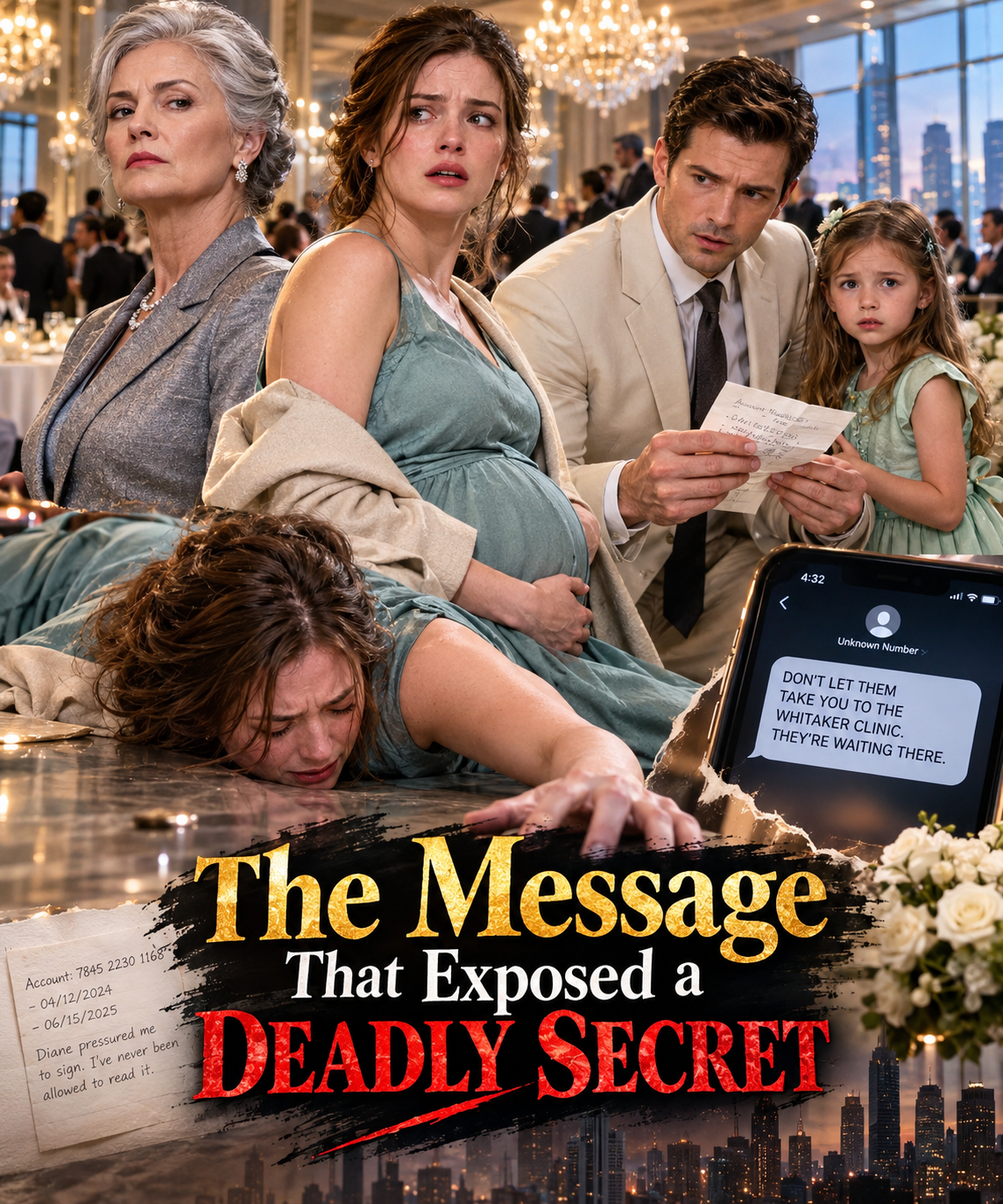
The name on the final page belonged to Whitaker Holdings, the private company Diane chaired. Thomas read it twice, hoping he had misunderstood. The document appeared to transfer money from Claire’s prenatal trust into a company account, with the baby listed only as a future contingent beneficiary.
The officer asked Thomas to forward the file. He hesitated. The archive contained confidential records, but the situation had moved beyond a private family dispute. He sent a copy to the officer and made a second copy for the hospital’s legal team.
Then he went to check on Lucy. She had curled into the corner of a waiting-room chair, her face hidden behind Claire’s coat. Thomas sat beside her.
“Is Mommy going to die?” she asked.
“No,” he said, though he had no way to know. “The doctors are taking care of her, and I’ll stay right here.”
Lucy looked up. “Grandma said the clinic had special medicine for Mommy.”
“What medicine?”
“She said Mommy was tired and needed something to sleep.”
Thomas felt a tightness in his chest. Claire had mentioned feeling unusually weak after one appointment at the clinic, but she had blamed pregnancy and stress. He had not known Diane had offered her medication.
A nurse came to escort Lucy to a family room. Thomas asked whether the hospital had received any calls from the Whitaker Clinic. The nurse checked with the charge desk and returned with a message: someone had called earlier asking whether Claire Bennett had been admitted. The caller claimed to be a relative but refused to provide a name.
The hospital had not confirmed anything. Still, Thomas told the nurse that Claire’s location should be shared only with the police and the people Claire had authorized.
A detective arrived shortly afterward. She introduced herself as Elena Ruiz and reviewed the threatening message, the false ambulance claim, and the forged transfer. Claire was stable, but doctors wanted to keep her under observation. Ruiz asked Thomas for a complete list of people who could access the family’s accounts.
He named Diane, himself, and a former office manager, Rachel Grant, who had left the firm the previous year. Rachel had handled scanning and filing, but never had authority to change account information.
“Could she have kept a login?” Ruiz asked.
“It’s possible,” Thomas said. “I should have disabled it immediately when she left.”
He felt the same old guilt returning. First he had failed to verify a signature. Now he learned he might have left a door open.
The detective asked him to contact the firm’s security team and preserve access logs. Thomas called his office. The administrator confirmed that a document had been uploaded using his credentials from an unfamiliar device. The login had come through a remote connection registered to the Whitaker Clinic.
Diane’s clinic had access to the records.
Thomas told Ruiz. She arranged for an officer to visit the clinic and secure its systems. Meanwhile, the hotel sent over security footage from the reception. The man with the false badge had entered through the loading entrance shortly before the argument. He was visible speaking briefly with Diane near a service corridor, then leaving before the paramedics arrived.
His face was partly hidden by a cap, but the hotel manager recognized him as a contractor who had worked on the clinic’s renovation. His name was Grant Sutter. The police issued an alert and began looking for him.
Claire woke after the examination, weak but able to speak. Thomas and Ruiz entered only after she asked for them. Lucy climbed carefully onto the chair beside her bed.
Thomas showed Claire the forged transfer. She recognized the signature as an older version of her own. “I signed something similar years ago,” she said. “When I was handling my father’s estate.”
“Could Diane have copied it?” Ruiz asked.
“She had access to the estate files. She offered to organize them after my father died.”
Claire stared at the ceiling. She had trusted Diane then. The older woman had appeared generous, even protective. Only after Claire became pregnant had she begun insisting on medical visits, legal papers, and financial arrangements “for the baby’s security.”
The baby’s security. The phrase now felt like a lock turning.
Ruiz asked about the clinic. Claire recalled that Diane had once left a small amber bottle in the passenger seat of her car and told her to take one pill before bed. Claire had refused, but Diane had said it was prescribed by the clinic’s doctor.
“Do you still have the bottle?” the detective asked.
“I left it in the kitchen cabinet.”
Ruiz arranged for an officer to retrieve it with Claire’s permission. The label bore the clinic’s name but no patient record number. It was not listed in Claire’s medical chart.
The doctor came in and said the baby’s heartbeat was strong. Claire exhaled, relief breaking through her fear. He recommended continued observation and no unnecessary stress.
Then Ruiz received a call. Grant Sutter’s car had been found near the clinic, abandoned with the doors unlocked. Inside, officers discovered a security badge, a set of keys, and a folded appointment card with Claire’s name on it.
The appointment was scheduled for the next morning at the Whitaker Clinic.
Claire had never made it.
On the back of the card, someone had written: Bring the original. No witnesses.
Ruiz asked Claire what original document Diane might want. Claire’s expression changed as she remembered an old envelope in her father’s safe, one she had given Diane to store after the funeral.
“It had his handwritten letter in it,” she said. “He said never to let the trust be changed without my permission.”
“Where is the safe now?” Ruiz asked.
“At Diane’s house.”